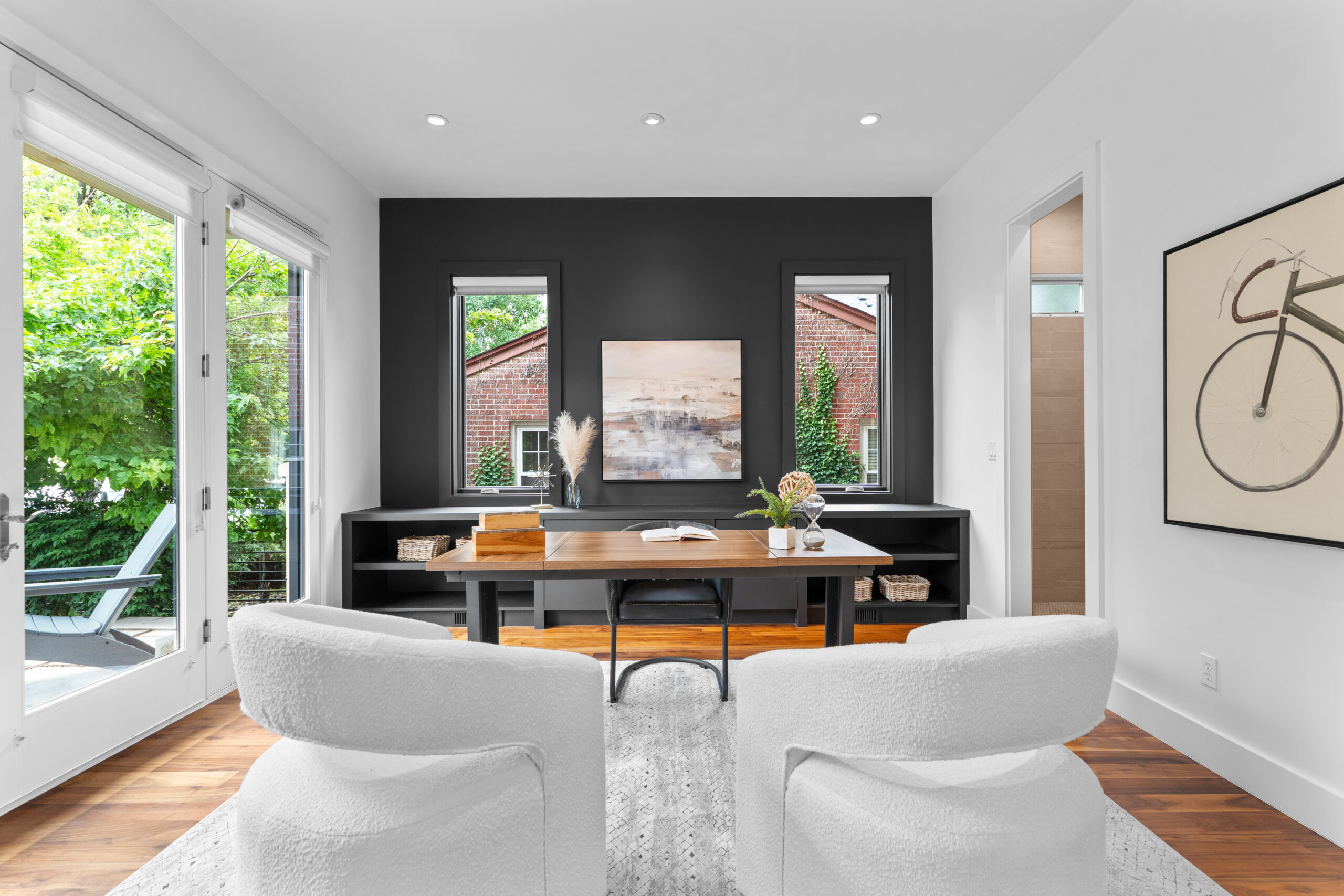
If you’re preparing to sell a home in Denver, you’re likely focused on pricing strategy, marketing, and timing the market correctly. But there’s one factor that quietly impacts your bottom line more than almost anything else:
Presentation.
Home staging isn’t just about aesthetics. It’s about protecting your equity, minimizing holding costs, reducing days on market, and preventing costly price reductions.
Let’s break down the real numbers behind what happens when a home isn’t staged.
Holding Costs Add Up Faster Than You Think
Every extra day your home sits on the market costs you money.
For a $1,000,000 home in Denver, typical monthly holding costs may include:
- Mortgage payment (principal + interest)
- Property taxes
- Homeowners insurance
- Utilities
- HOA dues (if applicable)
- Landscaping & maintenance
- Opportunity cost of tied-up equity
Conservatively, many sellers in this price point are carrying $5,000–$7,000 per month in holding costs.
That breaks down to roughly:
$166–$233 per day
An extra 30 days on the market?
👉 $5,000–$7,000 gone.
And that doesn’t include the emotional toll of uncertainty.
Time on Market Impacts Perceived Value
In Denver’s competitive and visually driven market, buyers are savvy. The longer a home sits, the more buyers begin to ask:
- What’s wrong with it?
- Why hasn’t it sold?
- Is the seller negotiable?
Homes that linger often attract lower offers because buyers assume there’s leverage.
Staged homes, on the other hand, create urgency and emotional connection from day one.
Case Study: The $1,000,000 Home
Let’s look at a realistic scenario.
Scenario A: Not Staged
- List Price: $1,000,000
- Days on Market: 60
- Two price reductions totaling $50,000
- Final Sale Price: $950,000
- Holding Costs (60 days @ $6,000/month): ~$12,000
- Total impact:
- $50,000 (price reductions)
- $12,000 (holding costs)
- = $62,000 lost
Scenario B: Professionally Staged
- Staging Investment: $4,000–$6,000 (varies by size & scope)
- Days on Market: 20–30
- Sold near asking price: $990,000–$1,000,000
- Holding Costs (30 days @ $6,000/month): ~$6,000
- Total investment:
- $5,000 (staging)
- $6,000 (holding)
- = ~$11,000
Difference between staged vs. unstaged scenario:
Potentially $40,000–$50,000+ preserved.
Staging isn’t an expense. It’s a risk mitigation strategy.
Preventing Price Reductions
The first price reduction is often the most damaging.
When a home drops in price:
It triggers new buyer alerts (which can be good)
But it also signals weakness in the original pricing or presentation
In many cases, it’s not the price that’s wrong, it’s the perceived value.
Staging helps:
- Define each space clearly
- Highlight architectural features
- Minimize flaws
- Create aspirational lifestyle moments
- Improve listing photography dramatically
Better photos → more showings
More showings → stronger offers
Stronger offers → fewer (or no) reductions
The Bottom Line
The real question isn’t:
“Can I afford to stage?”
It’s:
“Can I afford not to?”
For higher price points especially, skipping staging can quietly cost tens of thousands of dollars in:
- Extended holding costs
- Preventable price reductions
- Weakened negotiating power
In Denver’s competitive real estate landscape, staging isn’t about decorating.
It’s about protecting your equity and maximizing your return.
If you’re preparing to list and want to understand what staging would look like for your specific property, we’d love to create a strategic plan tailored to your home.